Be yourself; Everyone else is already taken.
— Oscar Wilde.

Indian girl in London, living the dream life. I write about fashion and its different aspects. I am trying to bring out the glamour as well as the grim side of fashion.
Be yourself; Everyone else is already taken.
— Oscar Wilde.
Indian girl in London, living the dream life. I write about fashion and its different aspects. I am trying to bring out the glamour as well as the grim side of fashion.
“Sculpt-to create solid objects that represent a thing, person, idea, etc. out of a material such as wood, clay, metal or stone.” (Cambridge Dictionary, 2019)
The word sculpted means giving a shape to a material by the means of carving it with a sharp object.
Here are some synonyms of sculpted-carve, model, chisel, sculpture, fashion, form, shape.
“For centuries used stone for figurative carvings and ornamental architectural work. Different types of stone were used in different regions, with sculptors generally using geologically local materials available nearby. Marble was used in Italy and exported to northern Europe from about 1550 onwards.” (Victoria and Albert museum, sculpture techniques, 2019)
The reason I chose this word for my visual theming is because, just like fashion, its a form of art. The shapes are carved with a particular design in mind and with detailing. Sculpted figures and monuments have always been considered beautiful, let that be a sculpted body or a main entrance carving in stone.
Here is a visual representation of the word sculpted
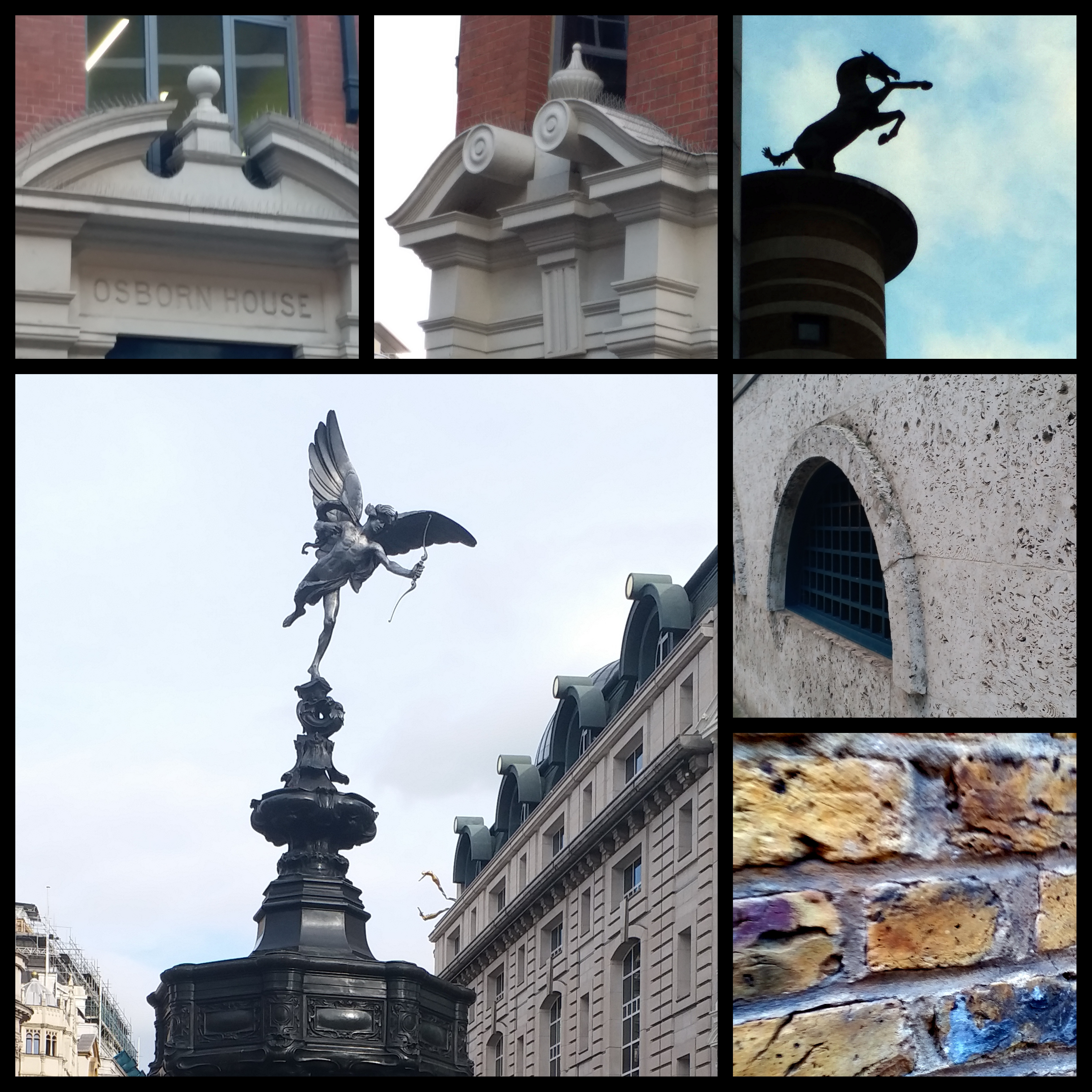
Each pictures shows a different kind of sculpture, specially the statue from Piccadilly circus square and the horse statue on top of Coventry University, London campus. The building entrance sculptures also look beautiful with their flowing designs and layered structure, thus making it the perfect example for the said word.
Article: “Consumers will suffer without ‘comprehensive’ trade deal” (Drapers, Isabella Fish, 17th Feb 2020)
With the Brexit, british government is on the path of negotiating trade laws with EU that is supposed to be put into action from Jan 2021. The negotiation is said to be a difficult change for consumers if not done correctly as they might have to pay higher cost for products. The article explains how it might be an inconvenience to retailers and consumer if the “zero tariff trade deal” is not discussed and considered.
Here are some key points from the article:
1. Negotiation of the trade deal might end up with consumers suffering
2. The BRC (British Retail Consortium) has launched a report “A fair deal for consumers: EU Trade Roadmap”, it mentions retail industry’s priority for the upcoming negotiations
3. Without the zero tariff deal, the consumers are the one who will be paying higher costs.
4. Helen Dickinson, chief executive of BRC said “higher tariff and extensive checks will result in recruiting a large army of trained staff for heaps of paper work along with exhaustive checks for thousands of lorries and end up with consumers paying more and reduced availability on shelves.
5. The negotiated terms without proper plan in action like advanced warning for training staff, proper IT upgrade or new infrastructure will affect the retailers and along with that it will affect the UK economy.
This article is a perfect example how the political criteria from PESTEL can affect fashion brands. New incorporation of laws can either result in a boost to the retail market or affect it badly. The decision needs to be made after careful consideration about how it affects the consumers by the end of it all.
What is PESTEL?
It is a marketing strategy that comprises of politics, economy, social, technological, environmental and legal which affects a company or brand.
LOCATION: ISLINGTON
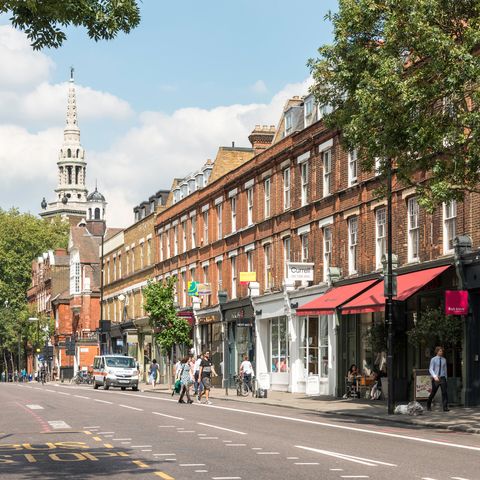
P.c- Greg Balfour Evan(2019) (Alamy Stock photo)
The area that we were assigned was Islington, where we visited the upper street. “Much has changed since the days of Charles Dickens, who described Upper Street as ‘among the noisiest and most disagreeable thoroughfares in London”( Gail Tolley, Timeout London, 2016)
Upper street runs directly through the very heart of Islington, which implies an outing here includes Glam mums with their push chairs and students bar hopping. The time we visited was rather unfortunate because almost everyone was in a rush. Although, we did spot a lot of different styles that we loved and selected 5 of the best we thought was exceptional.
To have a better understanding, we did a small survey with five different people asking about their
1. Favourite brand to shop
2. Inspiration for the outfit
3.Style that they prefer
4. Daily Go To Ensemble
5. Colour preference
6. Mode of shopping, whether its online or physical shopping
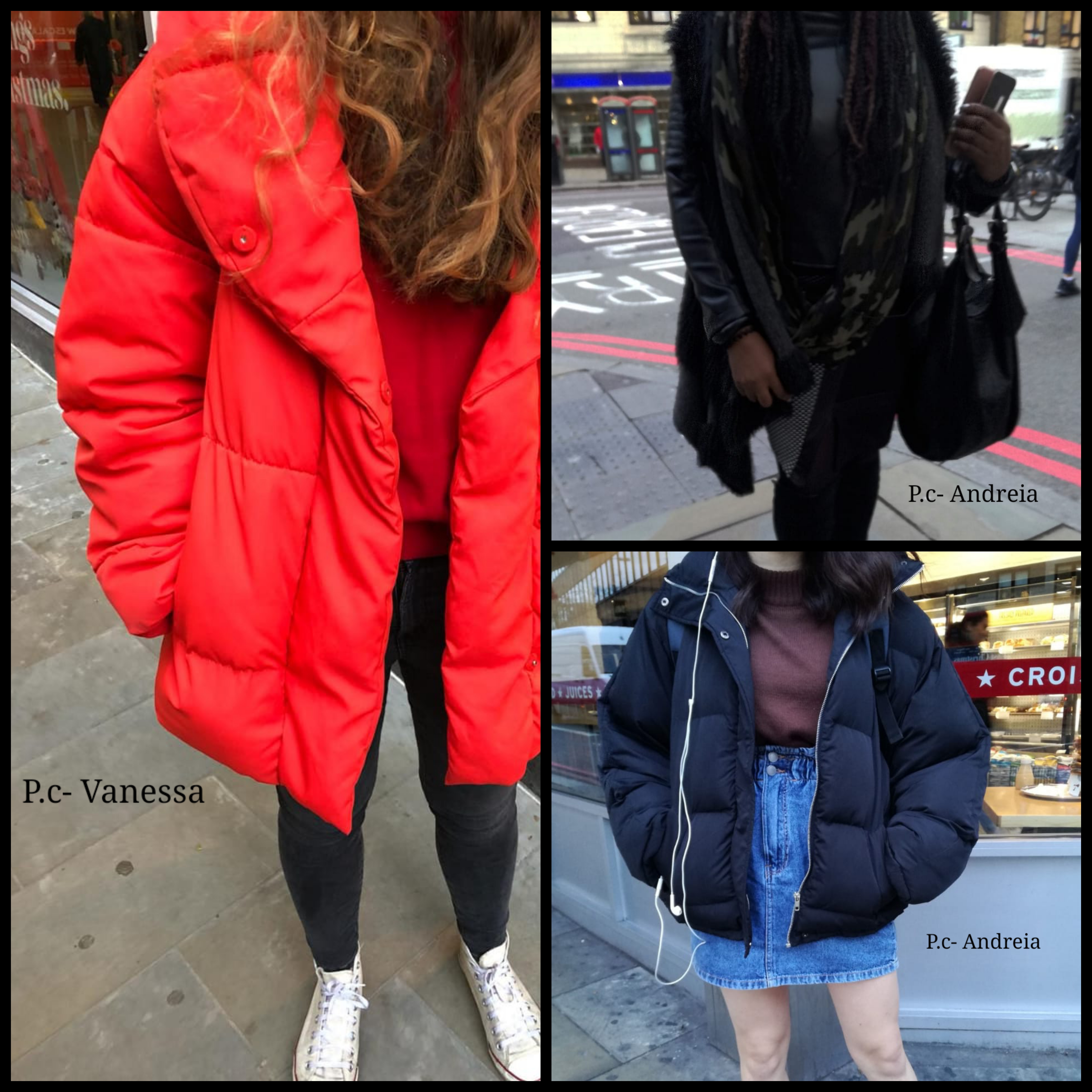
Participant 1 to 3 (left to right)
P.c- Bello, V (2019) and Pascoal, A (2019)
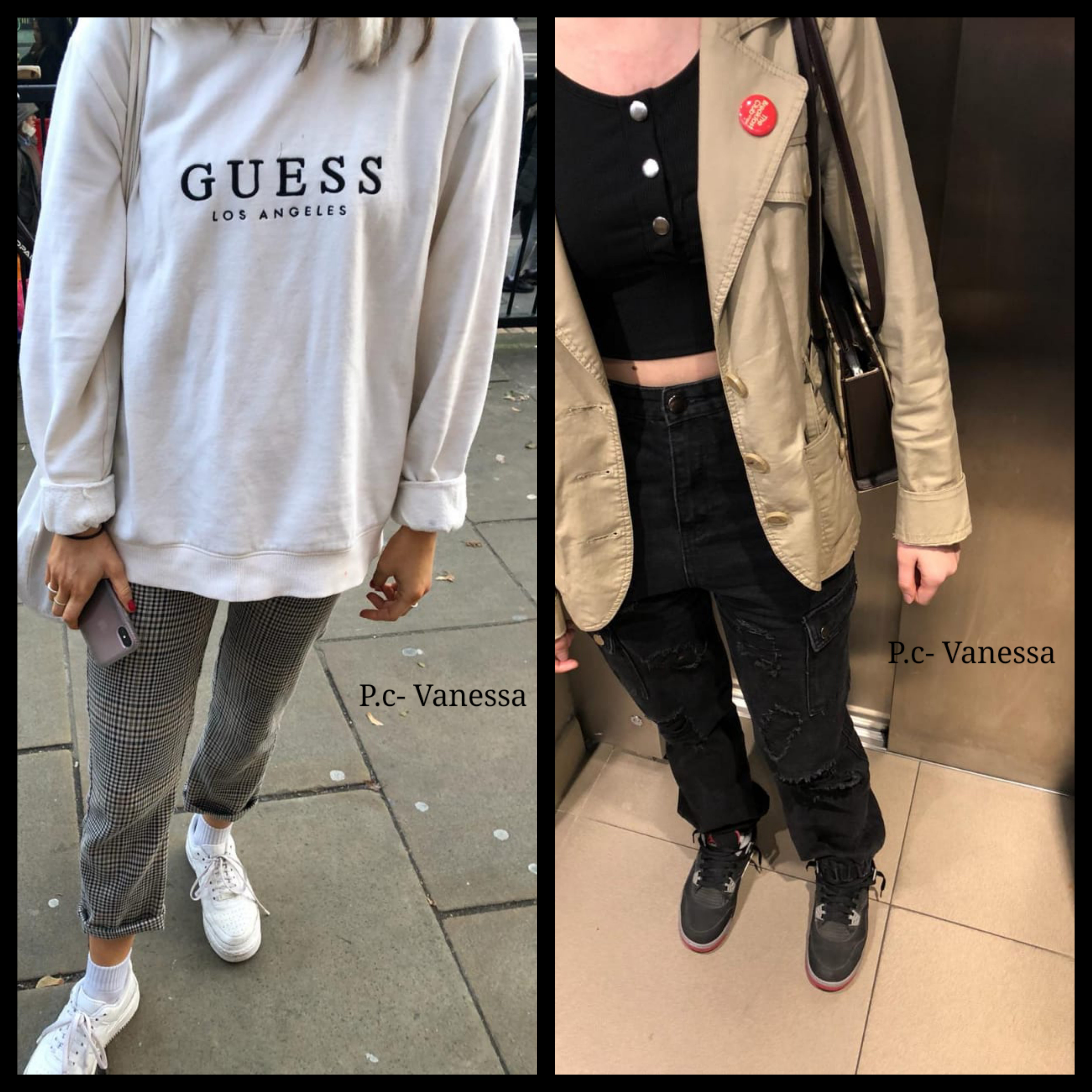
Participant 4 and 5 (left to right)
P.c- Bello, V (2019)
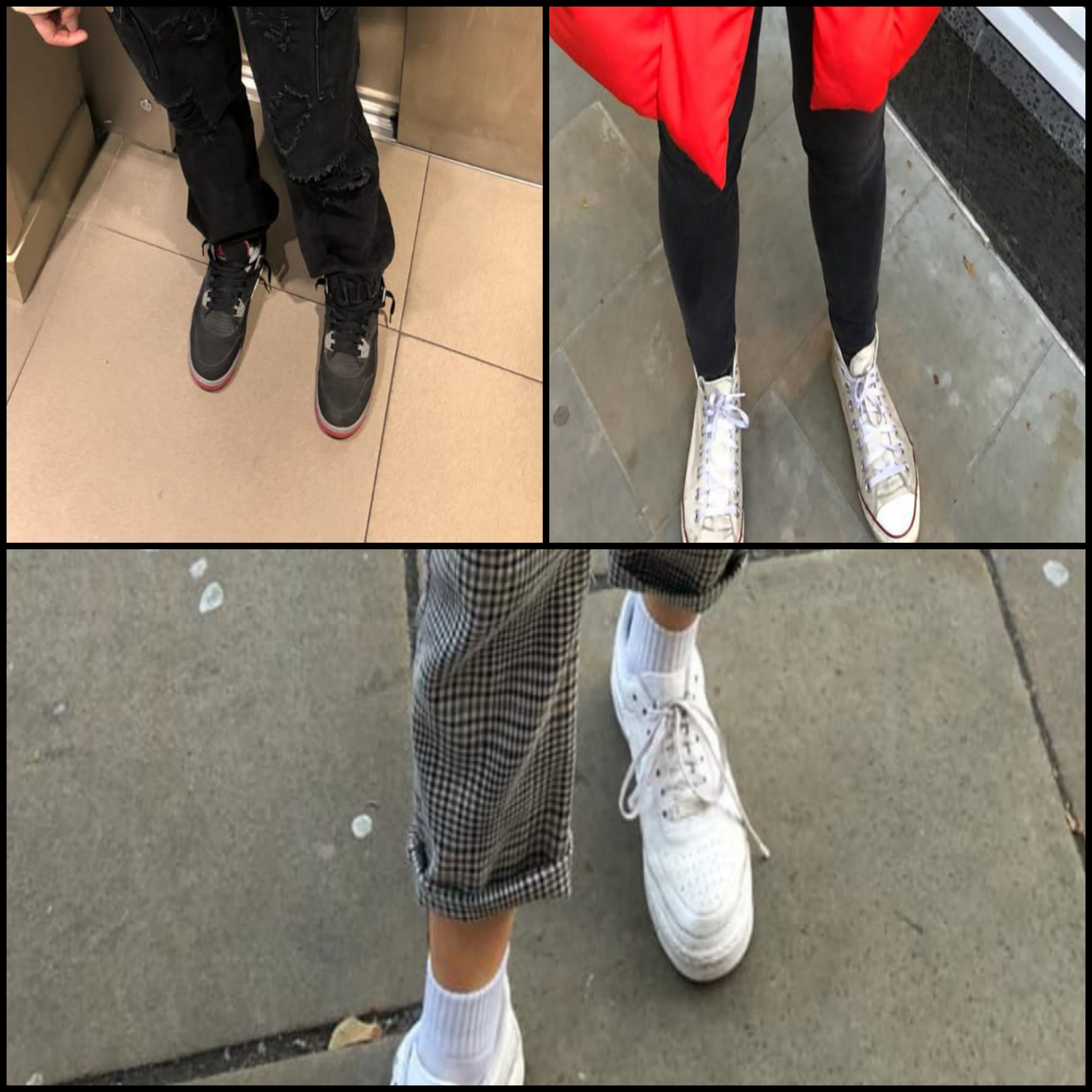
Most common footwear (above image)
P.c- Bello, V (2019)
With this survey, we noticed a lot of people wearing a lot of puffer jackets, long coats, casual sweatshirts with trousers and a few students who were adorning short skirts with puffer jackets with sneakers which was the most common footwear.
What we concluded from this trip was that the most common trend people preferred was street style, they liked high street brands, their daily go to emsemble was some casual tshirt, trousers and a jacket for winter. And, most people preferred shopping physically unless they have a time crunch but liked looking fashionable sometimes even at the cost of frostbite.

 Adya's fashion blog